What Is Yoga?
Yoga is far more than a workout. It is one of the oldest living traditions of human self-inquiry — a system of practices that weave together movement, breath, concentration, and ethical awareness into a single discipline. The word itself comes from the Sanskrit root yuj, meaning "to yoke" or "to unite," pointing to the practice's deepest intention: bringing body, mind, and spirit into alignment.
The earliest traces of yoga appear in the Indus Valley civilization, roughly 5,000 years ago, where archaeological seals depict figures in meditative postures. But yoga as a structured philosophy took shape through a series of foundational texts. The Rigveda, composed around 1500 BCE, contains some of the first references to ascetic practices and inner discipline. Centuries later, the Upanishads explored the nature of consciousness and introduced meditation as a path to self-knowledge. The Bhagavad Gita, set within the epic Mahabharata, articulated three core paths: the yoga of action (Karma Yoga), the yoga of devotion (Bhakti Yoga), and the yoga of knowledge (Jnana Yoga).
The text most people associate with classical yoga is Patanjali's Yoga Sutras, written around the second century CE. Patanjali outlined an eight-limbed path — the Ashtanga system — that moves from ethical conduct and self-discipline through physical postures and breath control, eventually arriving at meditation and samadhi, a state of profound absorption. This framework still underpins much of what we practice today, even when we are simply flowing through poses on a mat in a heated studio.
"Yoga is the stilling of the fluctuations of the mind." — Patanjali, Yoga Sutras 1.2
In the late 19th and early 20th centuries, yoga traveled from India to the West. Teachers like Swami Vivekananda, T. Krishnamacharya, and B.K.S. Iyengar adapted and evolved the practice, emphasizing physical postures (asana) and making yoga accessible to a global audience. Today, over 300 million people practice yoga worldwide. The styles have multiplied, the contexts have shifted, but the core invitation remains the same: slow down, pay attention, and discover what happens when body and breath move as one.
Popular Yoga Styles
Choosing a yoga style can feel overwhelming at first. Each tradition carries its own rhythm, intensity, and philosophy. Here is a clear look at six of the most widely practiced styles — think of them not as competitors but as different doorways into the same house.
Hatha Yoga
Hatha is the broad umbrella under which most physical yoga practices fall. In a modern class setting, "Hatha" typically means a slower-paced session that holds individual postures for several breaths, giving you time to find alignment and build body awareness. It is an excellent starting point for beginners because the pace allows the teacher to offer detailed cues. If you want a class where you can actually think about what your body is doing, Hatha is the place.
Vinyasa Yoga
Vinyasa links postures together into a continuous flow, synchronizing each movement with an inhale or exhale. The sequences vary from class to class — unlike Ashtanga, there is no fixed series — which keeps things creative and unpredictable. A well-taught Vinyasa class feels like a moving meditation: fluid, rhythmic, and moderately to strongly physical. It builds cardiovascular fitness alongside flexibility and tends to attract people who enjoy movement that feels more like dance than drill.
Ashtanga Yoga
Ashtanga follows a fixed series of postures performed in the same order every time. There are six series in total, each more demanding than the last, though most practitioners spend years working through the Primary Series alone. The repetition is the point: by removing the question of what comes next, Ashtanga lets you turn your attention entirely inward. It is physically rigorous and builds remarkable strength and stamina. Traditionally, it is practiced in a "Mysore style" format where students move at their own pace while a teacher circulates to adjust and guide.
Yin Yoga
Yin takes the opposite approach to dynamic styles. Postures are held passively for three to five minutes — sometimes longer — targeting the deep connective tissues, fascia, and joints rather than the muscles. The practice draws on Traditional Chinese Medicine and aims to stimulate the flow of energy through the body's meridian lines. Yin is quiet, introspective, and surprisingly challenging in its stillness. It is a powerful complement to more active practices and a genuine teacher of patience.
Kundalini Yoga
Kundalini blends physical postures with dynamic breathing exercises (kriyas), chanting, and meditation. It is designed to awaken dormant energy at the base of the spine and draw it upward through the body's energy centers (chakras). A Kundalini class can feel unlike any other yoga class you have attended — expect rapid breathwork, repetitive movements, mantras, and sometimes long meditations. It is deeply spiritual and tends to produce powerful emotional releases. If you are drawn to the energetic and meditative side of yoga, Kundalini is worth exploring.
Restorative Yoga
Restorative yoga uses props — bolsters, blankets, blocks, straps — to support the body in deeply relaxed postures held for extended periods. The goal is to activate the parasympathetic nervous system and allow the body to enter a state of genuine rest. A typical class might include only five or six poses across an entire hour. It is not about stretching or strengthening; it is about letting go. Restorative yoga is particularly valuable for people dealing with stress, burnout, chronic pain, or recovery from illness or injury.
Physical Benefits of Yoga
The physical benefits of a consistent yoga practice are well-documented and far-reaching. Unlike many forms of exercise that focus on one dimension of fitness, yoga addresses the body as an integrated system.
Flexibility and Range of Motion
This is the benefit people notice first. Yoga systematically takes your joints through their full range of motion, gradually lengthening muscles and releasing tension stored in connective tissue. Research published in the International Journal of Yoga shows that even two sessions per week can produce measurable improvements in hamstring and shoulder flexibility within eight weeks. Over time, this increased range of motion translates into easier daily movement — reaching, bending, turning — and a reduced risk of injury.
Strength and Muscle Tone
Yoga builds functional strength by asking your muscles to support your own body weight through varied ranges of motion. Holding Warrior II builds isometric endurance in the legs. Chaturanga develops the chest, shoulders, and core. Balancing postures like Tree Pose or Crow recruit stabilizer muscles that conventional weight training often misses. A 2015 study in the Journal of Strength and Conditioning Research found that a regular yoga practice improved upper body strength, core endurance, and deadlift performance in previously untrained participants.
Posture and Spinal Health
Modern life pulls us forward — into screens, steering wheels, and desk chairs. Yoga counteracts these patterns by strengthening the muscles of the back body and opening the chest and shoulders. Poses like Cobra, Locust, and Bridge directly target the posterior chain. Over weeks and months, practitioners often find they stand taller, sit with less effort, and experience less upper back and neck tension. For people with mild to moderate lower back pain, yoga has been shown to be as effective as physical therapy in several clinical trials.
Pain Relief
Chronic pain conditions — including lower back pain, arthritis, migraines, and fibromyalgia — respond well to gentle, consistent yoga practice. The mechanism is multi-layered: yoga reduces inflammation markers, calms the nervous system, improves circulation to damaged tissues, and changes the way the brain processes pain signals. The American College of Physicians now recommends yoga as a first-line treatment for chronic lower back pain before turning to medication.
Mental and Emotional Benefits
Ask long-term practitioners why they keep showing up, and most will talk about what yoga does for their mind before they mention their body. The mental benefits are not secondary effects — they are central to the practice.
Stress Reduction
Yoga downregulates the sympathetic nervous system — the "fight or flight" response — and activates the parasympathetic branch, which governs rest and recovery. This shift is measurable: studies show that yoga reduces cortisol levels, lowers resting heart rate, and decreases blood pressure. The effect is not limited to the time on the mat. Regular practitioners develop a greater capacity to return to calm after stressful events, a quality researchers call "stress resilience."
Mindfulness and Present-Moment Awareness
Every yoga class is, at its core, a training in attention. You are asked to notice the quality of your breath, the sensations in your body, the wandering of your thoughts — and then to gently return your focus. This is mindfulness in action. Over time, this skill transfers off the mat. You begin to catch reactive patterns earlier, make decisions with more clarity, and experience everyday moments more fully. A 2018 meta-analysis in the journal Mindfulness confirmed that yoga significantly increases dispositional mindfulness — the tendency to be aware and attentive in daily life.
Focus and Mental Clarity
The combination of physical movement, controlled breathing, and sustained attention creates conditions that sharpen cognitive function. Research from the University of Illinois found that even a single 20-minute yoga session improved working memory and reaction time more than 20 minutes of aerobic exercise. Consistent practice supports attention span, decision-making, and the ability to hold complex information in mind.
Emotional Balance
Yoga creates space between stimulus and response. When you hold a challenging pose and breathe through discomfort instead of reacting, you are practicing emotional regulation in a safe, controlled context. This capacity grows. Many practitioners report feeling less reactive to daily frustrations, more comfortable with uncertainty, and more able to sit with difficult emotions without being overwhelmed. Yoga does not eliminate hard feelings — it teaches you how to be with them.
"The pose begins when you want to leave it." — Baron Baptiste
How to Start as a Beginner
Starting yoga is simpler than most people imagine. You do not need to be flexible, athletic, or spiritually inclined. You just need to be willing to show up and pay attention. Here is how to make the beginning as smooth as possible.
Choose Your Starting Style
For most beginners, Hatha or a beginner-level Vinyasa class is the best entry point. Both allow time for instruction and alignment cues. Restorative yoga is also excellent if you are coming from a place of stress or physical limitation. Avoid jumping straight into Ashtanga or advanced Vinyasa — not because they are beyond you, but because learning the foundational postures well will make everything else easier later.
What You Need
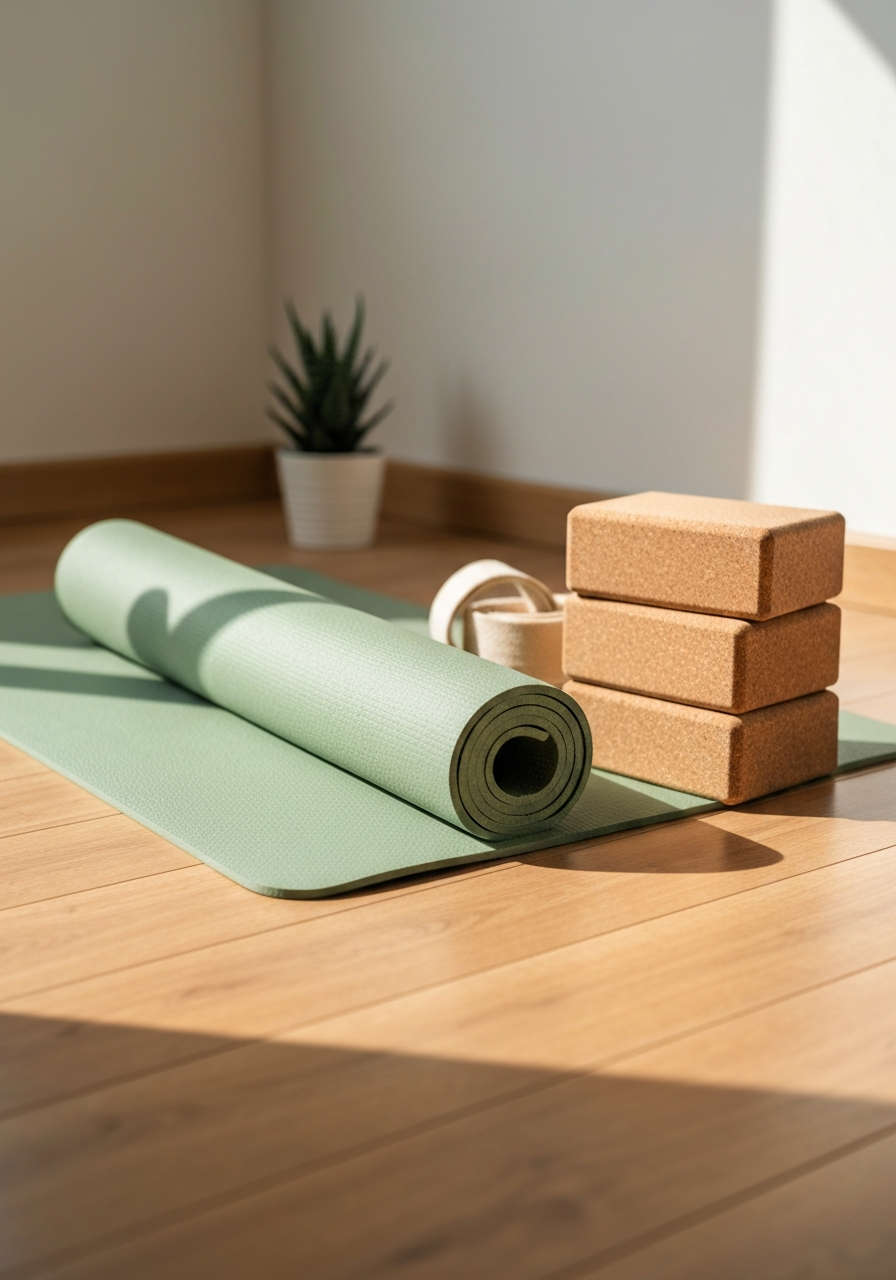
- A yoga mat. This is the only essential. Choose one with decent grip — slipping in Downward Dog is discouraging. A thickness of 4-6mm works well for most people.
- Comfortable clothing. Anything that lets you move freely and does not ride up when you bend forward. You do not need specialized yoga wear.
- Props (optional but helpful). Two yoga blocks and a strap can make many poses more accessible. Most studios provide these.
- Water. Stay hydrated, especially for heated or vigorous classes.
Your First Class
Arrive a few minutes early and let the teacher know you are new. Place your mat where you can see the instructor and at least one experienced student. Give yourself permission to rest in Child's Pose whenever you need to — this is not a sign of weakness, it is a sign of intelligence. Do not compare yourself to anyone else in the room. Everyone started exactly where you are.
Building a Home Practice
You do not need an hour. Ten to fifteen minutes of intentional movement and breathing each morning can be transformative. Start with a few Sun Salutations, add two or three standing poses, and close with a brief seated meditation. Consistency matters far more than duration. Three short sessions per week will serve you better than one ambitious weekend session.
Common Beginner Concerns
- "I'm not flexible enough." That is exactly why you start. Flexibility is a result of practice, not a prerequisite.
- "I don't know the poses." Neither did anyone else on their first day. Beginners' classes exist for this reason.
- "I can't quiet my mind." The practice is not about having a quiet mind — it is about noticing when your mind wanders and bringing it back. That noticing is the practice.
Yoga and Breathwork
Breath is the bridge between body and mind, and yoga has understood this for millennia. In the eight-limbed path of Patanjali, pranayama — the regulation of breath — is the fourth limb, positioned directly between the physical practice (asana) and the inner practices of concentration and meditation. This placement is not accidental. Breath is the gateway.
Every yoga class incorporates some form of breath awareness. In Vinyasa, the Ujjayi breath — a slightly constricted, ocean-like breath through the nose — creates an audible rhythm that anchors attention and generates internal heat. In Yin Yoga, slow diaphragmatic breathing signals the nervous system to soften and release. In Kundalini, rapid breathing techniques like Breath of Fire are used to energize and clear the mind.
But breathwork extends far beyond the yoga mat. Pranayama is a complete practice in its own right, with techniques that can calm anxiety, improve sleep, boost energy, and deepen meditation. If the physical postures of yoga have resonated with you, exploring dedicated breathwork and pranayama is a natural and rewarding next step.
"When the breath is unsteady, the mind is unsteady. When the breath is steady, the mind is steady." — Hatha Yoga Pradipika
Yoga and Energy Work
The yogic tradition has always recognized that the body is not just a physical structure — it is also an energetic one. The concept of prana, or life force energy, runs through every aspect of yoga philosophy. Prana flows through channels called nadis, concentrating at energy centers known as chakras. When prana flows freely, we experience vitality, clarity, and emotional equilibrium. When it stagnates, we feel sluggish, blocked, or unwell.
Many yoga practices are explicitly designed to move and balance this energy. Kundalini yoga works directly with the chakra system. Certain pranayama techniques, like Nadi Shodhana (alternate nostril breathing), aim to balance the two primary energy channels — ida and pingala — that run along the spine. Even simple poses like backbends and hip openers are understood in the yogic tradition as ways of releasing stored energy and emotion.
This energetic dimension of yoga connects naturally to other healing traditions that work with life force energy. Reiki, a Japanese healing modality, operates on a remarkably similar principle — that universal life force energy can be channeled through the body to promote healing and balance. Many practitioners find that combining yoga with Reiki deepens their experience of both, creating a more complete approach to wellbeing that honors the body, the breath, and the subtle energy that moves through us all.
Explore Breathwork