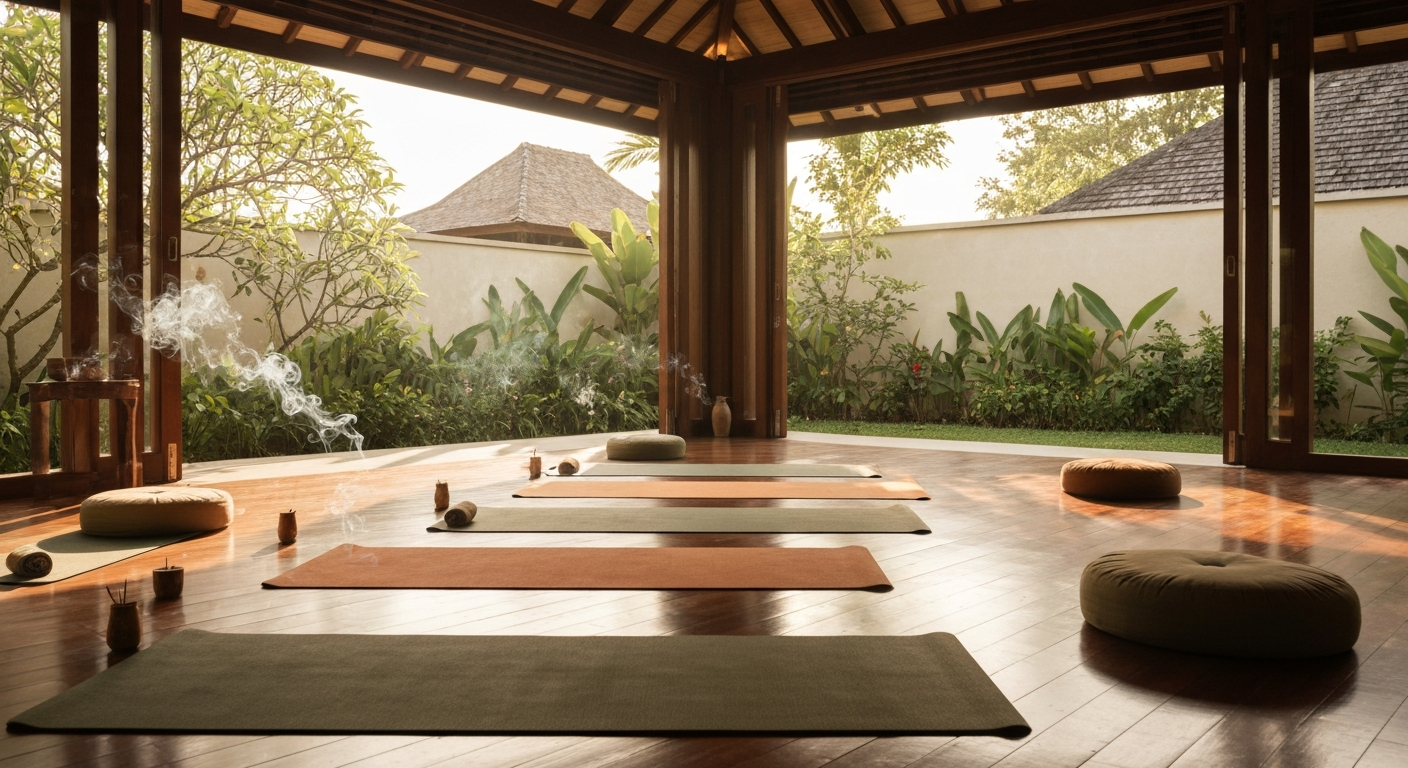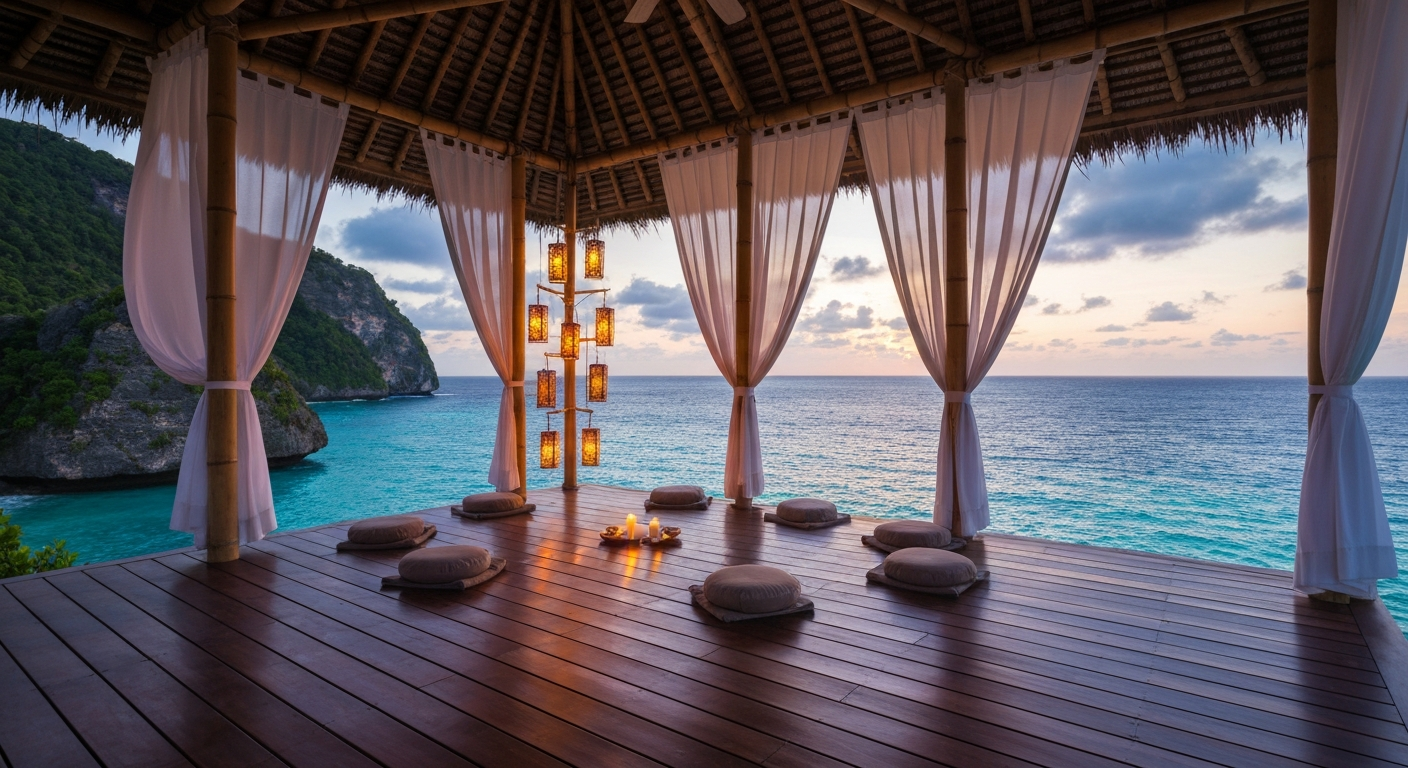
There is a moment on every yoga retreat -- usually around day two or three -- when something quietly shifts. The tension you have been carrying in your shoulders for months suddenly lets go. The mental chatter that follows you through every workday fades into the sound of birds, or waves, or wind through bamboo. You stop reaching for your phone first thing in the morning. You eat slowly. You breathe fully. And you realize that this is what your body has been asking for all along.
A yoga retreat is not a vacation, although it can feel like one. It is an intentional pause -- a chance to step away from the relentless pace of daily life and reconnect with your practice, your body, and yourself. Whether you are a seasoned practitioner looking to deepen your understanding or a curious beginner who wants to experience yoga beyond a studio class, a retreat offers something that no amount of home practice or YouTube tutorials can replicate: immersion.
Why Go on a Yoga Retreat?
The reasons people book a yoga retreat are as varied as the retreats themselves, but a few themes come up again and again.
Disconnect to Reconnect
We live in a state of chronic overstimulation. Notifications, emails, news cycles, social media -- our nervous systems were not designed for this level of input. A retreat strips all of that away, or at least dramatically reduces it. Most retreats encourage a digital detox, and many operate in locations where WiFi is limited by nature rather than by rule. This forced unplugging is, for many people, the single most transformative aspect of the experience. Without the constant pull of screens, you rediscover what it feels like to be genuinely present.
Deepen Your Practice
In a regular class, you get sixty to ninety minutes of instruction, then you roll up your mat and step back into the rush. On a retreat, you practice multiple times a day -- morning flows, afternoon workshops, evening meditation. You have time to ask questions, receive adjustments, and explore aspects of yoga that rarely fit into a studio schedule: philosophy, pranayama, mantra, anatomy, or the subtle energetics of the practice. Your body adapts. Your understanding grows. Progress that might take months at home can unfold in a single week of dedicated immersion.
Community and Connection
There is something about sharing a practice space with a small group of like-minded people -- eating meals together, laughing over a shared struggle in crow pose, sitting in comfortable silence during meditation -- that creates bonds quickly. The friendships formed on retreats often last years. You arrive as strangers and leave as a community. For solo travelers especially, this sense of belonging is a powerful draw.
Travel with Purpose
A yoga retreat gives structure to travel without making it rigid. You explore a new culture, taste unfamiliar food, and wake up in a beautiful place -- but you also have a daily rhythm that keeps you grounded. It is the best of both worlds: adventure and intention. You return home not just rested but genuinely changed.
Types of Yoga Retreats
Not all retreats are created equal, and that is a good thing. The variety means there is something for every personality, budget, and intention. Here are the most common formats you will encounter.
Silent Retreats
If the idea of not speaking for three to seven days sounds terrifying, it might be exactly what you need. Silent retreats combine yoga with extended periods of noble silence -- no talking, no reading, no writing, no eye contact. The practice is rooted in Vipassana meditation traditions and is designed to turn your awareness inward. It is profoundly uncomfortable at first. Then it becomes profoundly liberating. Silent retreats are best suited for practitioners who already have some meditation experience and are comfortable with stillness.
Adventure Retreats
These combine daily yoga with activities like surfing, hiking, rock climbing, or paddleboarding. The philosophy is simple: move your body in every way possible, then restore it on the mat. Adventure retreats tend to attract a younger, more energetic crowd and are perfect for people who would go stir-crazy sitting still all day. Expect early mornings, full days, and the best sleep of your life.
Luxury Wellness Retreats
Think private villas, organic farm-to-table meals prepared by personal chefs, daily spa treatments, and world-class teachers. Luxury retreats spare no expense in creating an environment of total comfort. They often include additional modalities like Reiki, sound healing, Ayurvedic consultations, or cacao ceremonies. The price tag is higher -- often two to five thousand dollars for a week -- but the experience is polished and deeply restorative.
Budget-Friendly Retreats
You do not need to spend a fortune to have a meaningful retreat experience. Southeast Asia, Central America, and parts of India offer excellent retreat programs for a fraction of what you would pay in Europe or the United States. Shared dormitory rooms, simple vegetarian meals, and local teachers keep costs down. In places like Rishikesh, India -- the birthplace of yoga -- you can find week-long retreats for three hundred to five hundred dollars, including accommodation and meals. The experience is often more authentic and less manicured, which many practitioners prefer.
Teacher Training Retreats
A 200-hour or 500-hour yoga teacher training is the most intensive retreat format. These programs run two to four weeks and combine rigorous practice with anatomy, philosophy, teaching methodology, and practicum hours. Even if you have no intention of teaching, a teacher training fundamentally changes your relationship with yoga. You learn why poses work the way they do, how to read a body, and how to hold space for others. It is an investment in both time and money, but graduates consistently describe it as one of the most transformative experiences of their lives.
Top Yoga Retreat Destinations
Geography matters more than you might think. The landscape, the culture, the food, the light -- all of it shapes your retreat experience. Here are five destinations that consistently deliver something special.
Bali, Indonesia
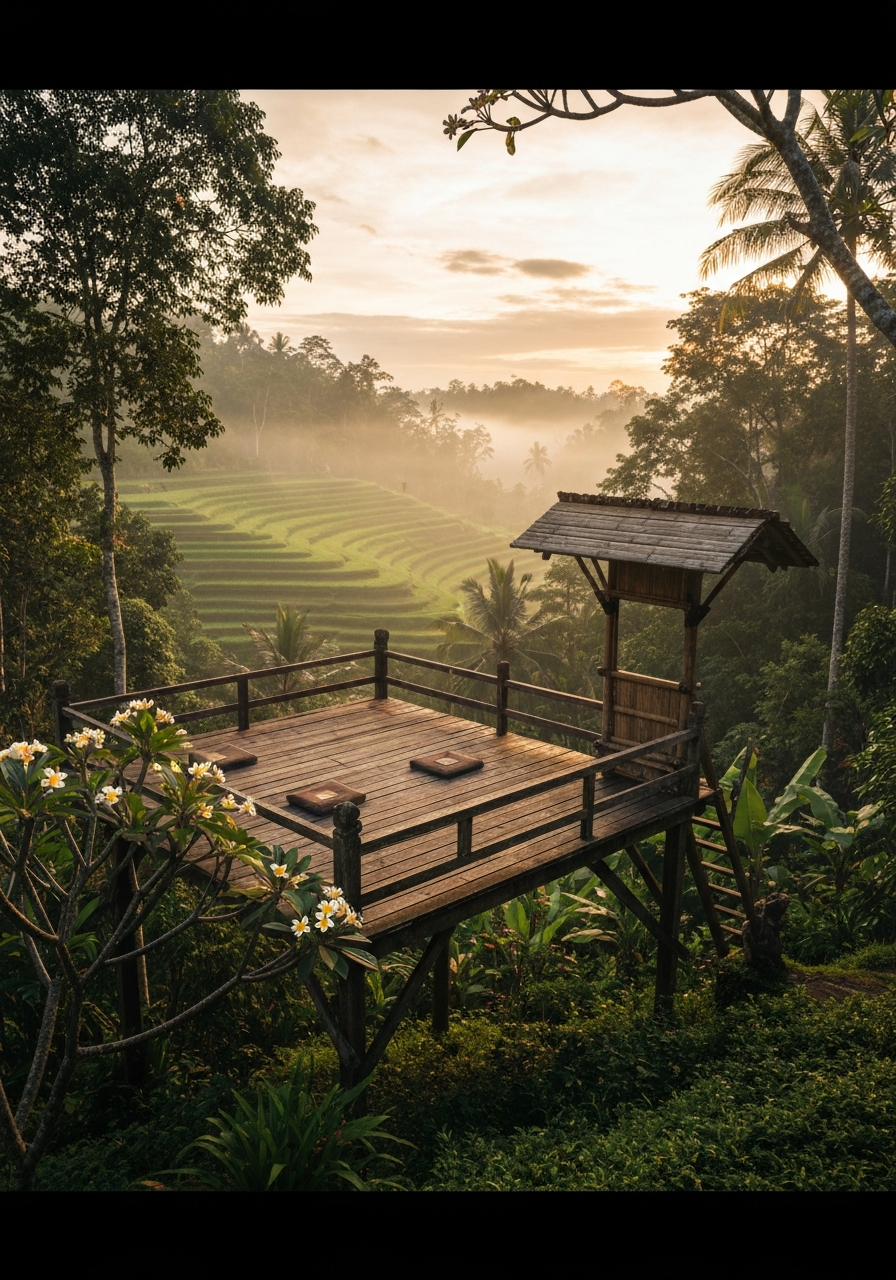
Bali has earned its reputation as the spiritual heart of the yoga world, and it is not hard to see why. Ubud, the cultural center of the island, sits among terraced rice paddies and ancient Hindu temples, surrounded by jungle that hums with life. The Balinese approach to spirituality is woven into daily life -- offerings of flowers and incense placed on doorsteps every morning, temple ceremonies that stop traffic, a genuine reverence for the unseen world. This creates an atmosphere that is hard to find anywhere else.
Retreat centers in Ubud range from simple bamboo shalas to architecturally stunning eco-resorts. The food scene is outstanding -- fresh tropical fruit, vibrant plant-based cuisine, and the best smoothie bowls on the planet. Beyond the mat, you can explore sacred water temples, hike Mount Batur at dawn, or take a day trip to the quieter eastern coast. Bali is affordable compared to Western destinations, with quality retreats typically running eight hundred to fifteen hundred dollars for a week including accommodation and meals.
Santorini, Greece
Practicing yoga on a terrace overlooking the caldera of Santorini, with the Aegean Sea stretching out below and whitewashed villages clinging to the cliffs above, is an experience that borders on the surreal. Santorini brings a distinctly Mediterranean flavor to the retreat experience -- olive oil-drenched meals, afternoon swims in volcanic hot springs, and golden light that photographers dream about.
Retreats here tend to be smaller and more intimate, often run by independent teachers who rent villa spaces during shoulder season. The best time to visit is May or October, when the tourist crowds have thinned and the temperatures are ideal for outdoor practice. Santorini works particularly well for couples or small groups of friends who want to combine culture, cuisine, and yoga without the full ashram experience.
Tuscany, Italy
There is a particular quality of light in Tuscany -- soft, amber, almost painterly -- that makes everything feel like a Renaissance canvas. Yoga retreats here are typically held in restored farmhouses or country estates surrounded by rolling hills, vineyards, and cypress-lined roads. The pace is slow and unhurried. Mornings begin with practice in gardens or olive groves, afternoons are free for exploring medieval hill towns, and evenings bring long communal dinners with local wine.
Tuscany is for people who believe that pleasure and discipline are not opposites. A glass of Chianti after an evening yin session is not contradictory here -- it is part of the philosophy. The Italian approach to life, with its emphasis on quality ingredients, long meals, and genuine human connection, aligns naturally with yogic principles of presence and gratitude. Retreats run year-round but are most beautiful in late spring and early autumn.
Malibu, California
Malibu sits at the intersection of Pacific Coast wildness and high-end wellness culture. The retreats here tend to be polished, well-produced, and led by teachers with large followings. You practice in clifftop studios with floor-to-ceiling ocean views, eat chef-prepared meals sourced from local organic farms, and might find yourself in a sound bath next to someone whose face you vaguely recognize from a magazine.
What Malibu offers beyond the glamour is genuine natural beauty. The Santa Monica Mountains meet the sea here, creating a landscape of dramatic canyons, hidden beaches, and chaparral-covered ridges. Morning practices with the sound of the Pacific below are genuinely moving. Malibu retreats are on the more expensive end -- expect to pay two thousand dollars and up for a weekend -- but the production value and teacher quality are consistently high.
Costa Rica
Costa Rica has a phrase that has become something of a national philosophy: Pura Vida, the pure life. It is not a slogan so much as an orientation toward simplicity, gratitude, and joy -- values that dovetail perfectly with yoga. The country's commitment to environmental conservation means that retreat centers here are often deeply ecological: solar-powered, built from reclaimed materials, surrounded by protected rainforest.
The Nicoya Peninsula and the Caribbean coast are the main retreat hubs. You practice to the soundtrack of howler monkeys and tropical birds. Between sessions, there is surfing, waterfall hikes, and wildlife spotting. The food leans tropical and plant-forward -- fresh ceviche, gallo pinto, and an abundance of papaya, mango, and coconut. Costa Rica hits a sweet spot between affordability and comfort, with most retreats falling in the one thousand to two thousand dollar range for a week. It is an especially good choice for first-time retreat-goers who want a balance of adventure and ease.
How to Choose the Right Retreat
With thousands of retreats on the market, choosing the right one can feel overwhelming. Here are the questions that actually matter.
What Do You Need Right Now?
Be honest with yourself. Are you burned out and need rest? Look for a restorative or yin-focused retreat. Are you craving adventure? Choose one that combines yoga with surfing or hiking. Do you want to go deep into philosophy and meditation? Find a retreat with a strong contemplative component. The best retreat is not the most beautiful or the most expensive -- it is the one that meets you where you are.
Solo or With Others?
Going solo is one of the most rewarding ways to experience a retreat. You set your own pace, you are open to new connections, and you do not have to compromise on what you want. That said, traveling with a friend or partner can add a layer of comfort, especially if it is your first time. Many retreats offer both private and shared accommodation, so you can travel with someone and still have your own space.
Budget Planning
Most retreat prices include accommodation, meals, and yoga sessions. What they often do not include: flights, airport transfers, excursions, spa treatments, and gratuities. Budget an additional twenty to thirty percent on top of the listed retreat price for these extras. Also consider travel insurance -- it is inexpensive and worth it, especially for international trips. If budget is tight, look at retreats in shoulder season or ask about work-trade programs, where you contribute a few hours of daily work in exchange for a reduced rate.
Duration
Weekend retreats (two to three days) offer a taste of the experience and work well for people with limited time. Week-long retreats (five to seven days) are the sweet spot -- long enough to truly unwind and establish new rhythms. Extended retreats (two to four weeks) are for deep immersion and are often combined with teacher training. If it is your first retreat, a week is ideal. Anything shorter and you may just be starting to relax when it is time to leave.
Questions to Ask Before Booking
- What style of yoga is taught, and what level is it aimed at?
- How many participants are in the group?
- What is the daily schedule like? How much free time is built in?
- Are meals included? Can dietary restrictions be accommodated?
- What is the cancellation and refund policy?
- Is there WiFi? Is the retreat in a remote location?
- What qualifications and experience does the lead teacher have?
- Are airport transfers included or arranged?
What to Pack for a Yoga Retreat
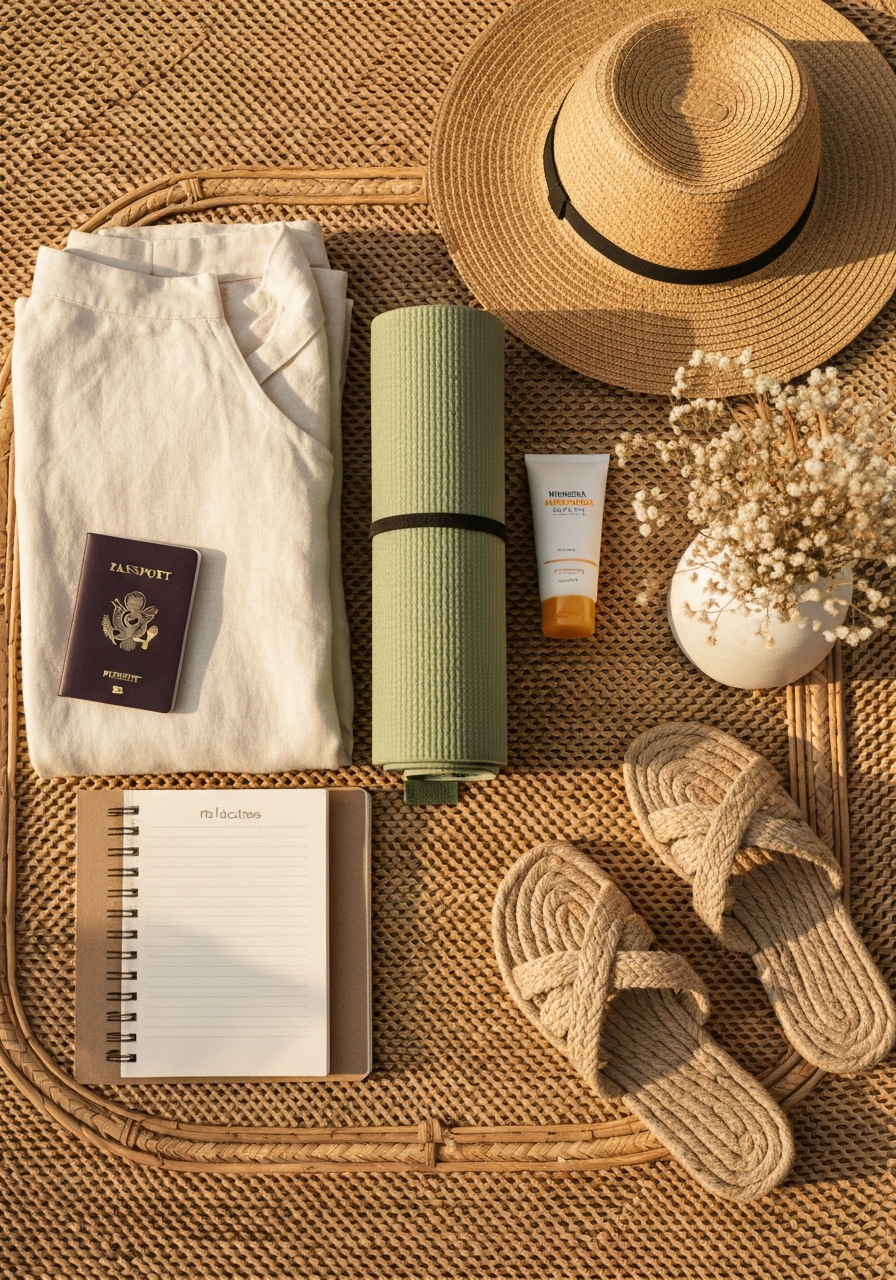
Packing for a retreat is an exercise in intentional minimalism. You need less than you think, but a few items make a real difference. Here is a practical checklist based on what experienced retreat-goers actually bring.
Practice Essentials
- Your own yoga mat (most retreats provide mats, but nothing beats the familiarity of your own)
- A lightweight travel mat or mat towel if you prefer to pack light
- Two to three sets of comfortable practice clothes (quick-dry fabrics are ideal)
- A light layer for early morning or evening sessions -- temperatures drop when you are still
- Yoga strap or resistance band (doubles as a luggage strap)
- A meditation cushion cover that you can stuff with a towel on arrival
Daily Life
- Refillable water bottle -- hydration matters more than usual when you are practicing multiple times a day
- Sunscreen, hat, and sunglasses for outdoor sessions
- Insect repellent (essential for tropical destinations)
- A journal and pen -- insights come fast on retreat, and you will want to capture them
- A good book or two (physical, not on a screen)
- Earplugs and an eye mask for shared accommodation or unfamiliar sleeping environments
- A small flashlight or headlamp for early morning walks in rural settings
- Comfortable sandals or flip-flops
- A light scarf or shawl (useful for meditation, temple visits, and chilly evenings)
Wellness
- Any personal medications, plus a basic first-aid kit
- Arnica cream or magnesium spray for sore muscles
- Essential oils -- lavender for sleep, peppermint for energy
- Your own toiletries in reusable containers (many eco-retreats provide basics)
- A small bag of your favorite herbal tea
What to Leave Behind
- Heavy books or multiple electronic devices
- Formal clothing -- you will not need it
- Expectations of how the experience "should" go
- Work-related materials (if you must bring a laptop, keep it in your bag)
When to Book Your Retreat
Timing affects both price and experience. Here is what to consider.
The best time to book depends on your destination. Bali is best from April to October (dry season). Costa Rica shines from December to April. European destinations like Tuscany and Santorini peak from May to September. Booking during shoulder season -- the weeks just before or after peak -- typically saves you fifteen to twenty-five percent and delivers smaller group sizes and more personal attention from teachers.
Most retreats offer early bird pricing if you book three to six months in advance. This can mean savings of one hundred to three hundred dollars. Popular retreats with well-known teachers sell out quickly, sometimes within days of announcement. If there is a specific teacher or retreat center you have your eye on, subscribe to their mailing list and book as soon as dates are released.
Last-minute deals do exist, particularly for retreats that have not filled to capacity. If your schedule is flexible and you are comfortable with uncertainty, you can sometimes find significant discounts two to three weeks before a retreat starts. However, this strategy works better for local or regional retreats than for international ones requiring flights.
Yoga Retreat Etiquette
Every retreat has its own culture, but a few principles are universal.
Respect the Space
Arrive to sessions on time or a few minutes early. Set up your mat quietly. If a session is already in progress, wait until an appropriate pause to enter. Keep common areas tidy. If the retreat center has house rules -- shoes off indoors, quiet hours, dietary guidelines -- follow them without complaint. These rules exist to protect the experience for everyone.
Put Your Phone Away
Even if the retreat does not mandate a full digital detox, treat it as an opportunity to reduce your screen time dramatically. Keep your phone on airplane mode during sessions. Resist the urge to photograph every beautiful moment -- some experiences are better stored in your body than on your camera roll. If you need to be reachable for emergencies, let people at home know the retreat center's phone number and designate specific times to check messages.
Be Open-Minded
You may encounter practices, philosophies, or rituals that are outside your comfort zone. A chanting circle might feel awkward. A teacher's alignment cue might contradict what you have learned before. A meal might not include the protein you are used to. Approach all of it with curiosity rather than judgment. You can always choose not to participate, but give things a genuine chance before deciding they are not for you.
Honor Others' Journeys
Retreats bring together people at very different stages of their practice and their lives. Some participants may be processing grief, recovering from illness, or navigating a major life transition. Be kind. Listen more than you speak. Do not offer unsolicited advice. And respect boundaries -- not everyone wants to share their story, and that is perfectly fine.
Bringing the Retreat Home
The real work of a retreat begins when you return to your daily life. The calm, the clarity, the sense of connection you cultivated -- all of it is available to you at home if you create the conditions for it.
Start small. Commit to a morning practice, even if it is just fifteen minutes of gentle movement and conscious breathing. Keep a journal. Eat one meal a day without screens. Go for a walk without headphones. These are not dramatic changes, but they are the threads that weave the retreat experience into your ordinary life.
Many retreat centers offer online follow-up sessions, alumni communities, or recommended reading lists. Take advantage of these resources. Stay in touch with the people you practiced with. And when the memory of the retreat starts to fade -- when the noise of daily life creeps back in and your shoulders start climbing toward your ears again -- consider it a gentle signal. It might be time to book your next one.
"The journey of a thousand miles begins with a single step." The journey of a transformative yoga retreat begins with the simple decision to go. Trust your instinct. You already know if it is time.